Pages

Showing posts with label Gender Issues. Show all posts

Friday, June 22, 2018

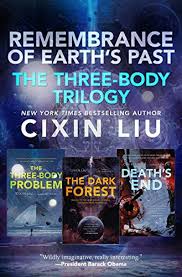
Cixin Liu’s Death’s End and Gender Issues


This book was translated by Ken Liu. 

The below contains moderate spoilers. Dramatic events happen fairly early on in this book. I reveal some of them.


Cixin Liu’s Death’s End covers a lot of ground both in terms of plot and themes. My general commentary on the book is here.


At one point in the book, Cheng Xin, the story’s main character, wakes from suspended animation several hundred years in the future. She finds that decades of easy living has softened humans. Violence has almost completely disappeared. There is little suffering or struggle. Life is incredibly comfortable for almost everyone. Something strange has happened as a result. Any ideal related to masculinity has disappeared. Femininity in all its forms has become a model to strive for among both men and women. 


Cheng Xin observes the men of the era, 


“[they] had smooth, lovely faces; long hair that draped over their shoulders; slender, soft bodies— as if their bones were made of bananas. Their movements were graceful and gentle, and their voices, carried to her by the breeze, were sweet and tender.… Back in her century, these people would have been considered ultra-feminine.”

Even the majority men of an earlier era who wake from hibernation from earlier times begin to change,

“Most men from the Common Era tried to, consciously or otherwise, feminize their appearance and personality to adjust to the new feminine society.”

There are also signs that the Trisolarans, the alien civilization that is trying to take over the Earth and who are now in constant communication with Earth, are trying to influence Earth’s culture to soften it up. 

The era is a time of strategic standoff between Earth and the Trisolarians. If the aliens attack a very difficult and tough decision will have to be made. If Earth does not retaliate quickly against a Trisolaran strike, humans will be at the mercy of the aliens. However, if Earth does retaliate, it will likely bring the destruction of both civilizations. The parallels between the nuclear standoff that existed between The United States and The Soviet Union are pointed out. 

A person is appointed called the Swordholder. This is the individual who can launch a retaliatory strike in the event of a Trisolarans attack. Luo Ji, from the previous book, has held the position for decades but his retirement is approaching. All the candidates for his replacement are people from the past who have woken from hibernation. People of the current era are deemed incapable of making the difficult decision as retaliation likely means the destruction of both Trisolaris and Earth. 

Cheng Xin, who is a candidate herself, describes the other candidates, who are men, who have woken up from hibernation and who have not taken on feminine characteristics of the time.

“She could see no sunlight in their eyes; their expressions appeared as masks that disguised their true feelings. Cheng Xin felt that she was facing a city wall built from six cold, hard rocks. The wall, roughened and toughened by the passing years, chilled her with its heaviness, and seemed to hint at death and bloodshed.”

Cheng Xin is eventually chosen as The Swordholder. Though she is a sympathetic character, this turns out to be a terrible mistake. When the Trisolarans attack, she does not launch retaliation. It later is revealed that the only reason that the attack occurred, was because Trisolarans had evaluated her personality and determined that it was unlikely that the would launch a counterattack. At one point it is observed, 

“In Cheng Xin’s subconscious, she was a protector, not a destroyer; she was a woman, not a warrior.”

As a result, though they are thwarted before the worst effects of their plan comes to fulfillment, the victorious Trisolarans begin to engage in what will be a nightmarish scenario for humans. 

It turns out that later on, Earth’s counterstrike does get launched. However, it is initiated by an Earth ship whose crew had been in suspended animation and who came from an earlier, pre – feminized era. 

The plot takes place in multiple timeframes, it is interesting that in a later timeframe when life for most humans has become a little harder, most men go back to a more masculine appearance. However, another time period is mentioned when living became comfortable and men began to also feminize.

Later, when humanity has recovered, Cheng Xin makes what be another error, when she averts a war but puts all of humanity in danger. 

Another character, Thomas Wade, is portrayed as ruthless and possibly a sadist. At one point he tries to murder Cheng Xin. However, it is later revealed that based on psychological evaluations he would have been the best candidate for Swordholder. His appointment would have forestalled the Trisolaran attack altogether. Later on, his plans for development of light speed ships is shown to be the best path for humanity’s future. 

With all of the above, Liu has set up a dichotomy in this book between masculine and the feminine traits. 

Poking around Google a bit, it seems that a fairly poplar idea coming from some Chinese commentators and opinion makers that modern men are taking on too many feminine qualities and that this will lead to bad outcomes in the future. I know that this strain of thought is also present in the West also, but it seems more prevalent in China. Obviously, this thinking influenced Liu in this book. 

Liu seems to be saying that an extremely comfortable society, completely free of violence  and suffering will lead to the extinction of masculinity. He tries to show that ultra-femininity will be a draw to people when living conditions become very easy. Even men from more masculine eras are drawn to the feminine ideal. The book portrays this as a natural, but in many ways, undesirable, progression. In the end, a feminized world would be unable to defend itself against external threats. 

More Google searching reveals that some are reading this book and are concluding that Liu is a sexist. I am not sure that this is the case. I think that gender issues are so complicated and that when authors stick their necks out with opinions on it they will inevitably ruffle from feathers. I think that when science fiction authors try to tackle it the results are usually interesting, even when I disagree with what they seem to be saying. 

I think that it makes sense to put masculine and feminine traits in their own buckets. These traits can range from dress and other aspects of physical appearance, mannerisms as well as less superficial traits like aggression and perhaps recklessness. I also think that most men and women display a combination of masculine and famine traits. Most men exhibit more masculine traits, most women exhibit more feminine traits. There are exceptions. Furthermore, while I think that culture can have a big impact on how certain traits are expressed, there is a major genetic component behind many of these traits. Though certain cultural trends might encourage more men to exhibit more feminine traits, I think that biology is too strong for the society that Liu envisions to form. 

Liu depicts the society of The Swordholder as unable to counter the Trisolaran threat because it has become too feminized. My take is that I think that humanity is in a kind of a balance, with most people exhibiting a combination of masculine and feminine traits. I think that if either masculine or feminine attributes were to universally disappear the outcome would be bad in all sorts of ways. Thus, while I think that there is no chance that masculinity will disappear like Liu envisions, the results would be very undesirable it they did. The same can be said however, if feminine traits were to disappear. 

I love it when science fiction authors dig into these issues. The genre of science fiction gives writers a vehicle to go into all sorts of directions on these issues. This is only a small part of what this book is about. Death’s End is filled with all sorts of interesting speculations on this and other issues. Folks who like science fiction and such speculations would do well to read this series. 

Thursday, May 4, 2017

Herland by Charlotte Perkins Gilman

Herland by Charlotte Perkins Gilman was published in 1915. It tells the story of an expedition to a remote, mountainous area that stumbles across a society that is utopian and entirely comprised of women.

The expedition is comprised of three men. Their personalities and initial beliefs concerning gender are important in terms of the book’s themes. Terry O. Nicholson is a womanizer and a sexist who views women as children. Jeff Margrave idolizes women and can be described as chivalrous.  Vandyck "Van" Jennings is the story’s first person narrator. His attitudes on gender are the most enlightened of the group. He sees women as equals.

The expedition uses a biplane to access a plateau inaccessible by land. There they find Herland, a civilization comprised only of women. Thousands of years earlier, Herland was cut off from the other parts of earth by a volcanic eruption. Most of the men were killed in  the eruption and an ensuing civil war. The women found a way to reproduce by Parthenogenesis, or without sexual intercourse. 

Gillman uses the trio’s stay in Herland as a vehicle for all sorts of social commentary. The women of the country have created a utopia. There is no violence. Everyone is mentally healthy and most are physically fit. The women have achieved a high level of intellectual, technical and moral development. Cooperation is paramount and there is almost no competition. The society is socialist.

This book is very funny. Van, Jeff and Terry’s interaction with the woman of Herland are often satirical. The satire is effective.  Terry in particular, is completely out of his element and though he is a popular and confident man in his home country, comes off as pretentious and buffoonish in Herland.

The women of Herland, as observed by their male visitors, exhibit few of the traditional feminine traits. The big exception is in the attitudes toward motherhood. Gilman sees motherhood and a set of behaviors associated with it as the primary difference between men and women when the effects of culture and sexism are removed.  Most of the virtues of Herland derive from the ethos that has formed has around motherhood.

The concept is described by Moadine , one of the teachers assigned to the men,

““The children in this country are the one center and focus of all our thoughts. Every step of our advance is always considered in its effect on them— on the race. You see, we are MOTHERS,” she repeated, as if in that she had said it all.“

Later, Van observes,

There you have it. You see, they were Mothers, not in our sense of helpless involuntary fecundity, forced to fill and overfill the land, every land, and then see their children suffer, sin, and die, fighting horribly with one another; but in the sense of Conscious Makers of People. Mother-love with them was not a brute passion, a mere “instinct,” a wholly personal feeling; it was— a religion. “

There is a lot more incorporated into the text related to this belief system and religion and how they are ingrained into the society of Herland.

As the months go by, each of the novel’s protagonists falls in love and marries a local woman. This leads to even more social commentary related to gender, psychology, religion, etc. It also leads to what is, in my opinion, Gilman’s most problematic contention. All of the male characters find that when  women are seen as competent, intelligent, confident and serious, sexual attraction to those women decreases.

At one point Van observes.

“I see now clearly enough why a certain kind of man….resents the professional development of women. It gets in the way of the sex ideal; it temporarily covers and excludes femininity. “

The narrative and characters seem to support the contention that the above is a universal fact that relates to sexual attraction. The novel’s protagonists go on to enjoy a more platonic and in eventually their view, a purer form of love without a sexual component.  The philosophical implications of this are further explored in the text.

While the above is likely to be true for some people who are attracted to women, it is clearly not the case for many others. The above characteristics do not exclude or hinder attraction for many, perhaps the majority of people. For some, the opposite is true. Intelligence, assertiveness and competence can be very attractive in both men and women. On this point, Gilman has gotten it wrong. Of course this book was written in 1915 so perhaps such a misunderstanding concerning this aspect of human attraction sexuality was understandable.

Based upon both the text and some biographical information that I read about Gilman, she believed that there were both biological and cultural differences between the ways that men and women usually behave. She was socialist who believed in a social progress. Her views were egalitarian. However, she believed that it was women who would likely lead great social change. The society that Gillman envisions here fits neatly within the author’s views.

I think that Gillman gets it right when she observes that the difference between men and women is a combination of biology and culture. Though I think that she attributes too many aspects to culture, considering the fact that was writing in 1915, I find her views more accurate then many who write and philosophize about gender issues today.

While I do not believe in socialism (I define socialism as a system in which most of an economy is collectivized through government or other means), I do believe that society can improve. Poverty and violence can be lessened. In fact, these ills have been reduced in many nations since Gillman’s time. The author has put a lot of thought into ways to alleviate these ills.

Ultimately I found this book to be very worthwhile. It is an interesting and entertaining story. It is funny. While the characters are not extremely complex they are interesting. As I often write: one does not have to agree with all of the author's views to find her speculations fascinating. Many of her observations on gender, violence, poverty, etc., are still very relevant in our time. I recommend this book to anyone interested in gender issues, as well as anyone who likes stories about fanciful societies.

Thursday, December 4, 2014

Feminism and Books


From time to time over the coming weeks and months, I am planning on reading and sharing my thoughts on several books that relate to the topics of feminism and violence aimed at women. Before I begin to post about these books and the ideas contained in them, I think that it is important to share a little bit about some of my personal biases, options and associations in relation to these topics. As of late my views have become very strong.


I have always considered myself a feminist. Feminism has always been one of the belief systems that I advocated. As with several other social topics, I would have described myself a moderate on the issue.  Over the past year, for various reasons, on various social media, but especially on Twitter, I have strongly spoken in support of causes focusing on the reduction of violence aimed at women as well as upon feminism. Over the past year, my support for feminist ideals, as well as my belief that violence aimed at women is an enormous societal ill that needs more attention, has strengthened.

 
There are two reasons for the increased level of my convictions. First, I have been reading blogs and articles, as well as listening to women, both in my life as well as on social media, concerning these issues. This has convinced me as to the gravity of the issues that women face worldwide as well as the far - reaching benefits of feminism to all of humanity.

Something else has solidified my beliefs and led me to a point where I would now describe myself as an adamant and committed feminist. Something dark has come along with the recent trend of women speaking out strongly on social media  about violence and sexism. I am not unique in observing unrelenting threats, harassment and insults, some of it perpetuated by semi - organized groups, against women who speak about gender issues on social media. This goes well beyond the usual trolling. It is extremely serious. At its worst it involves death, torture and rape threats directed at both notable Internet personalities as well as against less famous people who I know personally. There have also been campaigns of slander, as well as the release of extremely personal information aimed at women who speak about gender issues. Lately, there has been a fair amount of media coverage, especially on the serious American public policy shows and publications on this issue.

Most of what my friends and acquaintances have experienced was not even the result of speaking about feminism, but instead was prompted as a result of protesting the morally unambiguous issues of rape and violence directed at women.

There is a lot more that I have witnessed that has shocked and angered me. It has been really ugly and unrelenting attempt to silence women who express views on these issues.  If anyone is curious for additional details I will be happy to discuss in either in my comments section or through private email.

All this has helped to convince me that misogyny is a much greater problem in the Western world then I ever imagined, and that the ideals embodied by mainstream feminist thought are directly relevant to what is going in in social media.

I bring this up in context of my future posts to highlight that fact that I am not unbiased in this argument. The unrelenting rage that I have observed by a percentage of my fellow men, directed at women who speak on these issues has influenced my opinion in many areas relating to gender issues as well as feminism.

Though I believe that it a extremely important issue, social media harassment of women is certainly not all there is to gender relations, or to the idea set that is feminism. It is but one of many issues and arguably not the most important.  However, my observation of all this has influenced my personal views and has led to an emotional response. I have become downright furious at times. At other times I have lost my objectivity. I am the first to admit that I must be on guard to the fact that my outraged reaction to the harassment may be distorting my view of the big picture. With that said, what I have observed is clearly relevant to the big picture. As such, I felt the need to air this out before I begin commenting upon relevant books and ideas.

I choose to strive for intellectual honesty. That means I will attempt to examine all ideas critically and fairly. I will listen and discuss dissenting views. I intend to be as open minded and civil as I always am. My regular readers know what I mean.

I can and will apply my usual open mindedness to anti–feminist or the ambiguous opinions of others. Feminism is a set if ideas that like any set of ideas, should be open to scrutiny. There are reasoned and civil arguments against feminist ideals. I would even point out that I do not agree with every pro - feminist idea or concept. I will express my disagreement with ideas, including pro – feminist ones, as I see fit in the context of these books.

It is not anti – feminist ideas and opinions that anger me, rather it is the ubiquities and unrelenting harassment of feminists on social media (I must qualify this to say that there are a few extremely odious ideas that I have encountered recently that I have no respect for. For instance, I have run into folks who claim that most women are intellectually inferior to men, that society should accept rape as natural, etc.) . I have had rational discussions with both men and women, who for various reasons are anti – feminists, who are reasoned, respectful and are in no way misogynist. I consider this an intellectual disagreement.

Since I am bandying about the word, I think it is fitting to define what I believe feminism is. In my opinion the term is one of the most misconstrued around. For now, I will start with the basic Miriam - Webster’s definition,


The belief that men and women should have equal rights and opportunities.

and

Organized activity in support of women's rights and interests.


The above definition is simple and in accord with my own beliefs. I would go a little further and argue that in order to be a feminist these days also means that one believes that there is still progress to be made in the pursuit of equality.

Some of the thinkers that I will discuss in future posts may have alternate definitions that I hope to explore.

In my opinion feminism has been given a bad name. Feminists have been unfairly stigmatized as all adhering to the most extreme positions. Like most broad based ideologies with a lot of adherents, there are some very controversial feminist thinkers and ideas out there. One does not need to accept all, or any, radical or revolutionary ideas to be a feminist. However, I hope to investigate and weigh in upon some of these controversial ideas in upcoming posts.

I also would like to address the contention that I have heard from some feminists as well as others: that is the opinion that men cannot be feminists. Since I consider feminism to be a set of ideas and ideals, I would argue that anyone who holds such ideas and ideals is a feminist.

I want to mention a couple of books that I have already read and written commentary on.  While not considered a book on feminism, The Better Angels of Our Nature: Why Violence Has Declined by Steven Pinker, is in my opinion, a profoundly important work that relates to the subject. In this book, Pinker lays out a hardheaded and convincing case for what he believes are five historical forces driving humanity to a more peaceful, prosperous and virtuous future. One of the factors he calls “Feminization”, which is basically the empowerment of women and the increased influence of women on society. My commentary on this work is here.

Christine de Pizan ‘s The Book of The City of Ladies was written in 1405. Christine was amazingly ahead her time in her presentation of what I would call pre - feminist ideals as well as in her identification and criticism of what today we would call stereotyping. I commented upon this book here.

I do think that I will take on some challenging and controversial books. I will be reading authors who have ideas on gender issues that I both agree and disagree with. Thus I anticipate some very interesting posts to come.